Spin-Echo instrument for neutron OAM generation
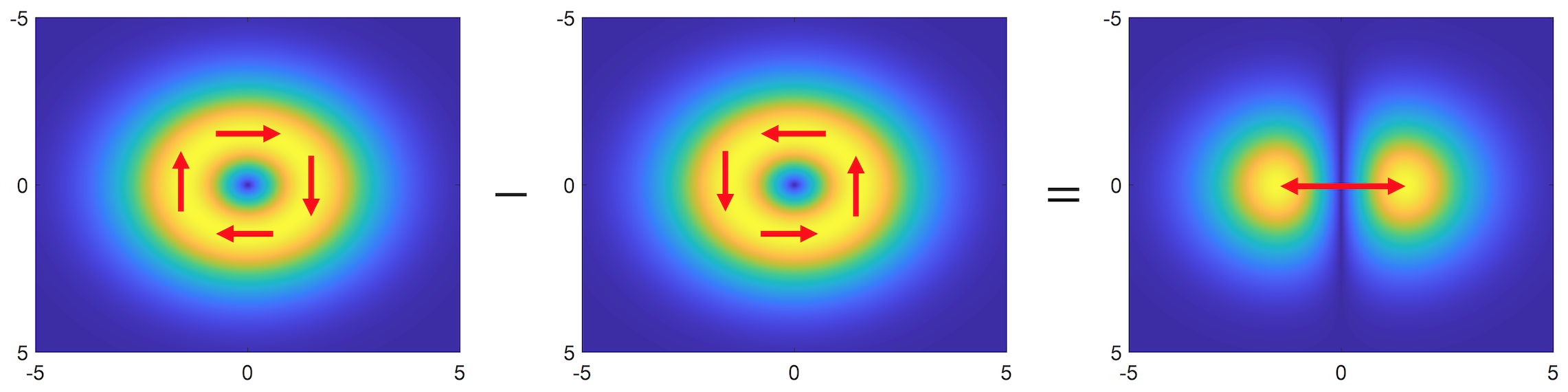
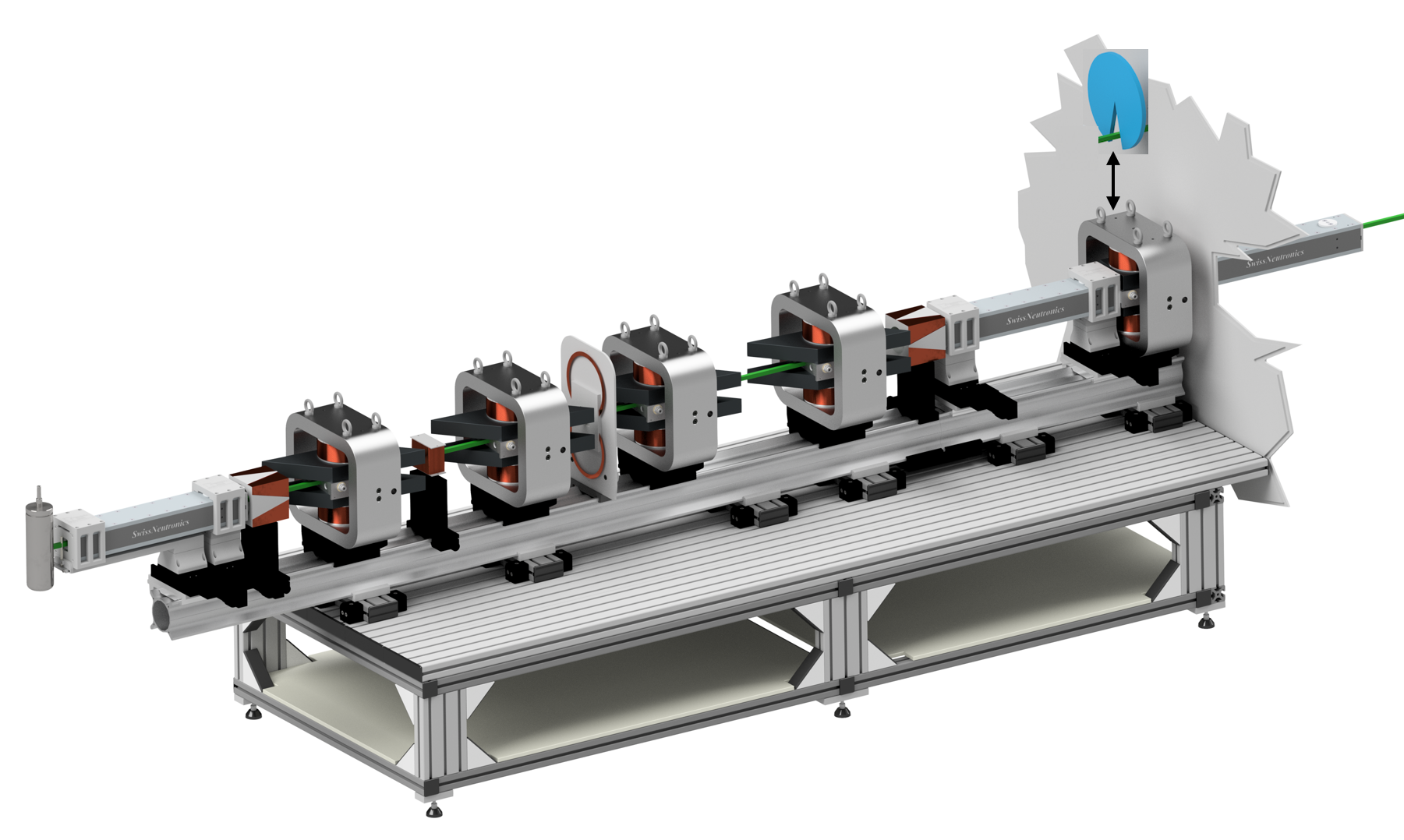
July 8, 2026 4:12 pmThe Spin-Echo Small-Angle Neutron Scattering (SESANS), Coherent Averaging Neutron Instrument for Spin-echo Interferometry and fUndamental Science (CANISIUS), delivered first experimental results 1 (see here for details of the instrument). CANISIUS is located at the 250 kW Training, Research, Isotopes, General Atomics research facility of the Atominstitut, TU Wien, Austria. It is built in a versatile way, such that it can be operated in both a continuous broadband beam and a pulsed time of flight beam. We demonstrate a new spin echo interferometry tool, which uses incomplete recombination of the two path states to generate composite wavefunctions with special structure. In particular, we show that this method produces neutron wavefunctions that exist in a superposition of two quantum mechanical orbital angular momentum modes, . We illustrate that just as this method can be used to generate certain structured waves, it may also be used to characterize the structure of the input wavefunction. A render of the instrument can be seen below.
Spin-Echo Small-Angle Neutron Scattering (SESANS) is an advanced scattering methodology that measures structural correlations in materials directly in real space, spanning length scales from tens of nanometers to several micrometers. Unlike conventional Small-Angle Neutron Scattering (SANS), which records scattering intensities in reciprocal space as a function of the momentum transfer vector Q, SESANS utilizes the quantum mechanical spin of the neutron to encode the scattering angle directly into the polarization state of the neutron beam. As a consequence SESANS can resolve structures that are smaller compared to beam divergence. The encoding mechanism relies on the spatial modulation of Larmor precession. The standard schematic of a SESANS instrument is illustrated in below:

A polarized neutron beam passes through a magnetic field region with inclined boundaries. The magnetic field triggers Larmor precession of the neutron spin, where the total accumulated precession angle depends strictly on the path length traveled through the field. After passing through the sample, the neutrons enter a second magnetic field region featuring an identical but reversed magnetic orientation (or utilize a π-flipper configuration). If a neutron passes through the sample without scattering, the second field perfectly unwinds the precession accumulated in the first field, recovering 100% of the initial polarization—a phenomenon known as the spin echo. However, if a neutron scatters by a small angle θ inside the sample, its path through the second field changes relative to the first. This path difference prevents a perfect unwind, causing a measurable drop in the final polarization. The measured polarization is related to the real-space structure via the relation: , where is the total scattering cross-section, is the real-space correlation function, and represents the *spin-echo length*. The variable functions as a virtual ruler in real space. It is scaled dynamically by adjusting the magnetic field strength or the neutron wavelength (), completely bypassing the need to physically move detector components.
A unique asset of CANISIUS is its capacity to generate and detect Neutron Orbital Angular Momentum (OAM). By utilizing coherent averaging and specialized phase plates, can imprint a twisting, helical phase profile onto the neutron wavefront to create “vortex neutrons”. These structured waves unlock entirely new experimental pathways for probing topological materials, quantum entanglement, and fundamental violations of quantum inequalities.